Smart Guard Pest ServicesSmart Guard Pest Services

Bed Bug Thermal & Desiccant Remediation

Thermal remediation provides immediate eradication where retail chemical sprays and DIY foggers routinely fail due to widespread insect resistance. Bringing interior zones to a sustained temperature between 120°F and…
Call (937) 637-0188 →(937) 637-0188
Bed Bug Thermal & Desiccant Remediation in Dayton, OH
Quick answer
  • What is included: Comprehensive thermal diagnostic assessment, whole-room forced-air heating to 120–135°F, and precision desiccant dust injection into wall cavities.
  • Response speed: Same-day or scheduled 24-hour remediation dispatch across Montgomery County and central Dayton neighborhoods.
  • Pricing baseline: Focused single-area treatments start at our standard service minimum of $250, with full-property remediation priced after on-site structural measurement.
  • Target zones: Mattress seams, box springs, headboards, baseboard perimeters, carpet tack strips, electrical wall plates, and deep structural crevices.
  • How to book: Call (937) 637-0188 to schedule a local technician inspection and receive your pre-treatment room preparation guide.

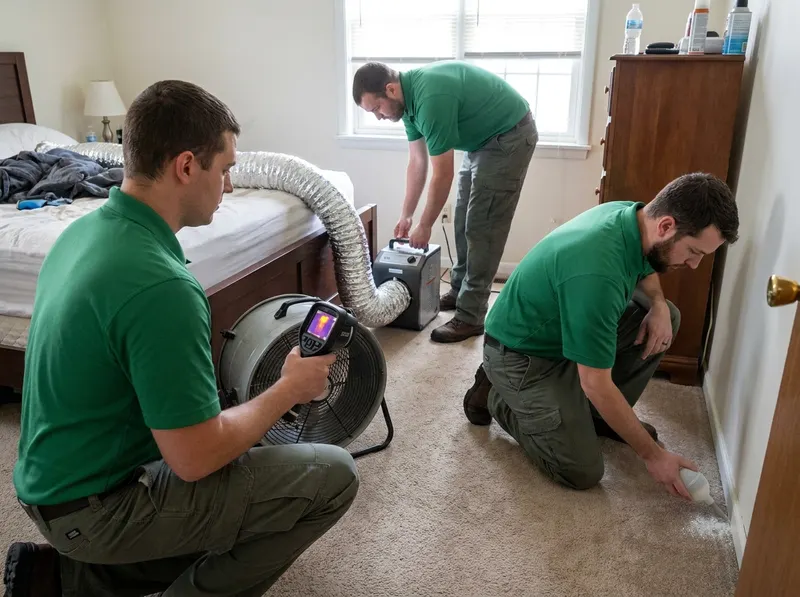
Thermal remediation provides immediate eradication where retail chemical sprays and DIY foggers routinely fail due to widespread insect resistance. Bringing interior zones to a sustained temperature between 120°F and 135°F forces heat through mattress seams, box springs, upholstered furniture, and structural joints, neutralizing adult bed bugs, nymphs, and desiccation-resistant eggs in a single treatment. To reinforce the perimeter without broadcasting synthetic liquid pesticides across living spaces, technicians inject amorphous silica gel dust into electrical outlets, baseboard recesses, and framing voids. This desiccant disrupts the insect's protective outer waxy layer, resulting in rapid dehydration upon contact and preventing survivor relocation.

Older architectural layouts across Dayton demand tailored application strategies. In historic properties throughout the Oregon District, St. Anne's Hill, and South Park, tongue-and-groove flooring, heavy wood trim, and lathe-and-plaster walls offer extensive hiding voids. Multi-unit brick structures in Belmont, Dayton View, and rental housing near the University of Dayton feature shared plumbing lines and radiator runs that serve as primary pest highways. Using industrial air movers calibrated by infrared thermal sensors ensures heat fully penetrates antique framing and deep masonry pockets without warping original woodwork, while desiccant barriers cut off migration between adjoining living quarters.

Choosing thermal and desiccant remediation eliminates the prolonged disruption of multiple chemical retreatments while keeping indoor air free from synthetic chemical fumes. Although heat protocols require specific pre-treatment preparation—such as relocating meltable items, pressurized cans, and delicate vinyl—the treatment cycle concludes in a single day. Every remediation plan is executed as a standalone, targeted service focused entirely on source elimination and perimeter defense, never requiring long-term contract lock-ins.

What it costs

Targeted Single-Room Thermal & Desiccant Application$250 – $450
Standard Multi-Room Residential Heat Remediation (1–2 Bedrooms)$650 – $1,250
Comprehensive Full-Home Thermal Remediation (3+ Bedrooms)$1,300 – $2,400
Multi-Unit Residential & Commercial RemediationCustom quote following on-site evaluation

Every job gets a firm, written price after a free on-site visit.

Common questions

Why is structural heat paired with desiccant dust for Dayton bed bug treatments?
Structural heat kills all active bed bugs and eggs inside furniture and exposed areas within hours, while desiccant dust provides long-lasting physical protection inside Dayton wall voids to intercept any hidden insects attempting to relocate.
Do occupants need to leave their Dayton residence during thermal remediation?
Occupants and pets must vacate the Dayton property during the active thermal heating phase while indoor temperatures remain elevated between 120°F and 135°F. Re-entry is permitted as soon as the equipment is shut down and rooms return to standard indoor temperatures.
Will remediation temperatures cause damage to furnishings in Dayton homes?
Remediation temperatures are closely regulated using digital sensors to avoid damage to standard drywall, structural timber, and household furniture in Dayton properties. Technicians provide a straightforward preparation checklist so homeowners can safely remove temperature-sensitive items like candles, cosmetics, and aerosols before service begins.
How long does a bed bug thermal treatment visit take in Dayton, OH?
A typical bed bug thermal and desiccant treatment in Dayton takes between four and eight hours depending on the home's total square footage, layout, and contents. High-velocity air movers continuously circulate warm air until target structural temperatures are sustained across every room.
Is amorphous silica desiccant dust safe around children and pets in Dayton residences?
Amorphous silica dust is an inert, non-neurotoxic desiccant that acts mechanically rather than chemically, posing minimal risk when placed inside enclosed Dayton wall cavities and behind baseboards. Technicians apply it strictly into inaccessible structural voids to prevent direct human or pet contact.

Ready to get started?

Tell us about your bed bug thermal & desiccant remediation job in Dayton and we'll send a clear, written quote — usually the same day.